The latest episode of The Unafraid Show covered exactly what college football fans have come to expect from George Wrighster: sharp opinions, real solutions, big-picture thinking, and zero patience for lazy narratives. From the dysfunction surrounding college sports governance to a deep NIL reality check, a wide-ranging interview with Shawne Merriman, and a passionate breakdown of Oregon’s championship path, this show packed multiple major conversations into one episode.
Segment 1: Trump’s college sports roundtable won’t fix what’s broken + new NIL system is already showing cracks
George opened the show by tackling the headline-grabbing college sports roundtable called by President Donald Trump. While the guest list included powerful names from college athletics, media, and politics, George’s main point was simple: the people who matter most were not in the room. In his view, no real fix is possible without player representation.
He laid out the true list of problems facing college football: the calendar, transfer portal timing, scheduling, NIL abuse, pay-for-play confusion, eligibility rules, officiating transparency, and playoff structure. George argued that the sport keeps trying to patch systemic issues with cosmetic conversations, while the real problem is that too many power brokers are trying to protect their own control.
His solution was a three-step plan. First, power has to be centralized under one entity with real authority over the sport. Second, players need organized leadership capable of negotiating on their behalf. Third, college football needs a collective bargaining structure that treats the sport like the professional enterprise it already is. Without that, George believes the lawsuits, inconsistency, and instability will continue.
The next major topic built directly off the first: the NCAA’s new NIL enforcement system is not working the way many promised it would. George argued that the College Sports Commission and the NIL clearing structure were supposed to create order, but instead they have created more confusion and delay.
He explained the difference between real NIL and pay-for-play, stressing that most of what fans call NIL today is actually pay-for-play under a different label. George pointed to deals getting delayed, rejected, or challenged, while players are left in limbo and millions of dollars are tied up in the process. He also highlighted how programs and brands are already finding ways around the supposed cap structure, making the system feel more like a temporary workaround than an actual solution.
George’s core position was that players should be able to earn unlimited legitimate NIL money, but pay-for-play compensation should exist within guardrails. His comparison to the NFL and NBA was clear: stars can make huge endorsement money off the field, but the league still needs competitive balance inside the sport. That, in his opinion, is the model college football has to move toward.
Segment 3: Shawne Merriman on football, contracts, fighting, and fatherhood
Former NFL All-Pro Shawne Merriman joined the show for one of the episode’s most entertaining and insightful segments. The conversation started with college football and recruiting, especially how money has changed the game for programs like Maryland. Merriman agreed that schools without real financial backing are at a massive disadvantage in the current Big Ten environment.
From there, the discussion turned to NIL accountability. Merriman said players should absolutely be paid, but he also believes there must be consequences when players take major money and then leave without honoring the spirit of the agreement. George connected that idea back to the need for contracts, structure, and collective bargaining.
The interview then shifted into NFL Draft talk, especially edge rushers and how front offices evaluate physical traits like arm length, explosiveness, and overall measurables. Merriman gave strong takes on what separates good players from top-15 picks and why certain pass rushers project better than others at the next level.
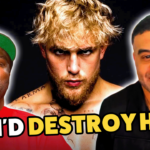
Then came one of the most fun parts of the episode: Jake Paul fight talk. Merriman made it clear that football toughness does not automatically translate to boxing or MMA. He warned that any football player stepping into the ring without real sparring experience would be in trouble, and both he and George spoke candidly about how helpless combat sports can make even elite athletes feel once fatigue and skill gaps set in.
The conversation closed on a more personal note with fatherhood, youth sports, and what it is like watching your own child play football. Merriman spoke honestly about trying not to live through his son, while George reflected on how different the game feels when you are watching your own kids take hits instead of taking them yourself.
Segment 4: Oregon’s championship pressure is real
In the final major segment, George and Ralph Amsden turned to Oregon, and George did not hide from the pressure. His message was clear: this is a team built to chase a national championship, and nobody around the program should pretend otherwise. He described Oregon as a program that has been close for years, but now needs to finally “get the ring.”
The breakdown of Oregon’s most important games centered less on name value and more on which matchups could actually shape the season. USC was framed as a recruiting and perception game. Illinois was presented as a dangerous road test in the middle of the schedule. Michigan was treated as a major threat because of coaching changes and talent. Michigan State was identified as a difficult late-season grind, and Washington was labeled a game Oregon simply cannot afford to lose if it wants to win a national title.
George also made an interesting point about Ohio State: despite the brand power of that matchup, he does not believe it is one of Oregon’s most important regular-season games, because in the playoff era, one loss to a top team does not necessarily define the season.
Leave a Reply
You must be logged in to post a comment.