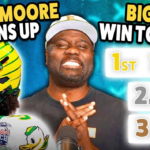
The latest episode of The Unafraid Show covered a lot of ground, but the connecting thread was simple: in college sports, image matters, leadership matters, and the truth usually lives underneath the surface narrative. From Matt Leinart drawing a line on retired jerseys, to Dante Moore showing real growth, to Greg Sankey maneuvering for more power, to Bruce Pearl catching heat for more than just nepotism, the show set the table before diving deep into Big Ten win totals and what those numbers really say about the 2026 season.
Matt Leinart Was Right to Protect a Retired Number
The first major topic centered on Matt Leinart refusing to un-retire his No. 11 jersey at USC for a recruit. George backed Leinart’s position completely. In an era where recruiting has become volatile and players can leave almost as quickly as they arrive, the idea of treating retired numbers as sacred still matters.
The point was not that no player could ever wear that number again under any circumstance, but that it should be earned, not used as a recruiting gimmick. George tied that into the current NIL environment, where even jersey numbers can become part of negotiations, and argued that handing recruits everything upfront can damage locker-room culture. His bigger point was that programs get in trouble when they reward potential over proven production.
Dante Moore’s Story Shows Why Development Still Matters
Next came one of the strongest segments of the show: Dante Moore’s letter about his mental health struggles and how it reframes his journey. George revisited the tough moments Moore endured at UCLA and pushed back on the easy criticism that labeled him mentally weak.
Instead, George framed Moore’s decision to leave UCLA, sit behind Dillon Gabriel at Oregon, and take time to develop as a sign of maturity. He also emphasized the human side of Moore’s story, including the emotional burden of being a 17-year-old freshman while his mother was battling cancer. The takeaway was powerful: talent can take a player to the stage, but that does not mean he is mentally, emotionally, or spiritually ready for the moment. George argued that Moore’s willingness to slow down, regroup, and grow is exactly why he now looks like a future high-level college quarterback and eventual NFL player.
Greg Sankey Is Still Playing the Political Game
From there, the show turned to SEC commissioner Greg Sankey, and George did not mince words. He described Sankey as operating like a politician: offering selective solutions, making veiled threats, and framing issues in a way that protects his own power.
George acknowledged that Sankey was right to warn against rushing into every new idea, but he also argued that nearly every public position Sankey takes is rooted in keeping the SEC on top. The bigger concern was how college football continues to be run as a collection of self-interested entities rather than as one enterprise. George argued that the sport needs leadership focused on growing college football as a whole, not just insulating individual conferences from risk.
Why Bruce Pearl Keeps Drawing Criticism
Then came Bruce Pearl, and George explained why so many fans react negatively to him. It is not just the recent criticism tied to Auburn basketball. It is the full résumé.
George walked through Pearl’s long history of controversy, from recruiting accusations, to NCAA issues at Tennessee, to Auburn’s brush with scandal, and finally to the optics of his son Steven Pearl being elevated into the head job. The point was nuanced: nepotism does not automatically mean incompetence, but it does mean someone got to skip the line. When that is added to a history that already makes people skeptical, backlash becomes inevitable. George made clear that Bruce Pearl’s coaching success is real, but so is the baggage.
USC’s Win Total Comes With Real Pressure
The show’s longest stretch focused on Big Ten win totals, and it opened with USC at 8.5 wins. George actually leaned over, which is notable given how critical he has been of Lincoln Riley’s version of USC.
His argument was that USC should beat the lesser teams on the schedule and can scratch out one key swing game. But the pressure is enormous. If USC loses a cluster of games around Oregon, Washington, Penn State, and Ohio State, the whole season could spiral, and George made it clear that a four- or five-loss year could become a referendum on Riley’s future. In other words, the over is possible, but so is complete instability.
Ohio State Still Looks Like a Playoff Team
On Ohio State at 9.5, George went over as well, though with a twist. He projected the Buckeyes to lose at Texas and then drop another big game, while still finishing good enough to hit 10 wins and make the Playoff.
But he also raised an interesting dynamic around Julian Sayin and Jeremiah Smith. Ohio State has elite talent, but the Buckeyes’ season may hinge on whether the offense settles into rhythm quickly under new leadership and whether all that star power stays aligned once the season gets hard.
Oregon Looks Built to Win Big Again
For Oregon at 10.5, George made his stance clear: this is a national-title caliber team. He compared the Ducks’ profile to the kind of roster people usually call a foregone conclusion.
Even while acknowledging that perfection is hard, he still framed Oregon as likely finishing with one loss at worst, with the only real issue being what happens if Dante Moore is unavailable. That was the only scenario that created meaningful variance in his mind. Otherwise, George sees Oregon as built to contend for everything.
Michigan, Indiana, and Penn State Each Tell a Different Story
George also liked Michigan over 8.5, believing the Wolverines are set up well stylistically, though he pointed out that Bryce Underwood is the swing factor. If Michigan goes under, in his view, it will be because the quarterback situation falls apart.
On Indiana at 10.5, he went under and blasted the non-conference schedule as embarrassing, even while praising Kurt Cignetti as a coach. On Penn State at 9.5, he went over and argued the Nittany Lions benefit from avoiding the league’s heaviest hitters. The recurring theme through all of it was that schedules matter, and too many programs are gaming the system with soft early slates instead of serving fans quality football.
The Guys Reveal Their Brackets
Ralph thinks it’ll be Duke over Arizona, while George likes the Houston Cougars to make a historic run
Leave a Reply
You must be logged in to post a comment.