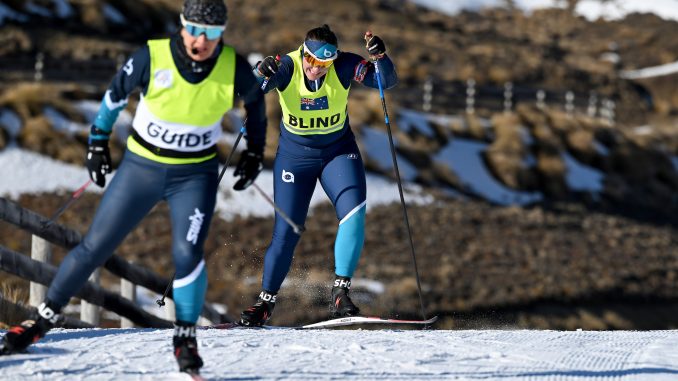
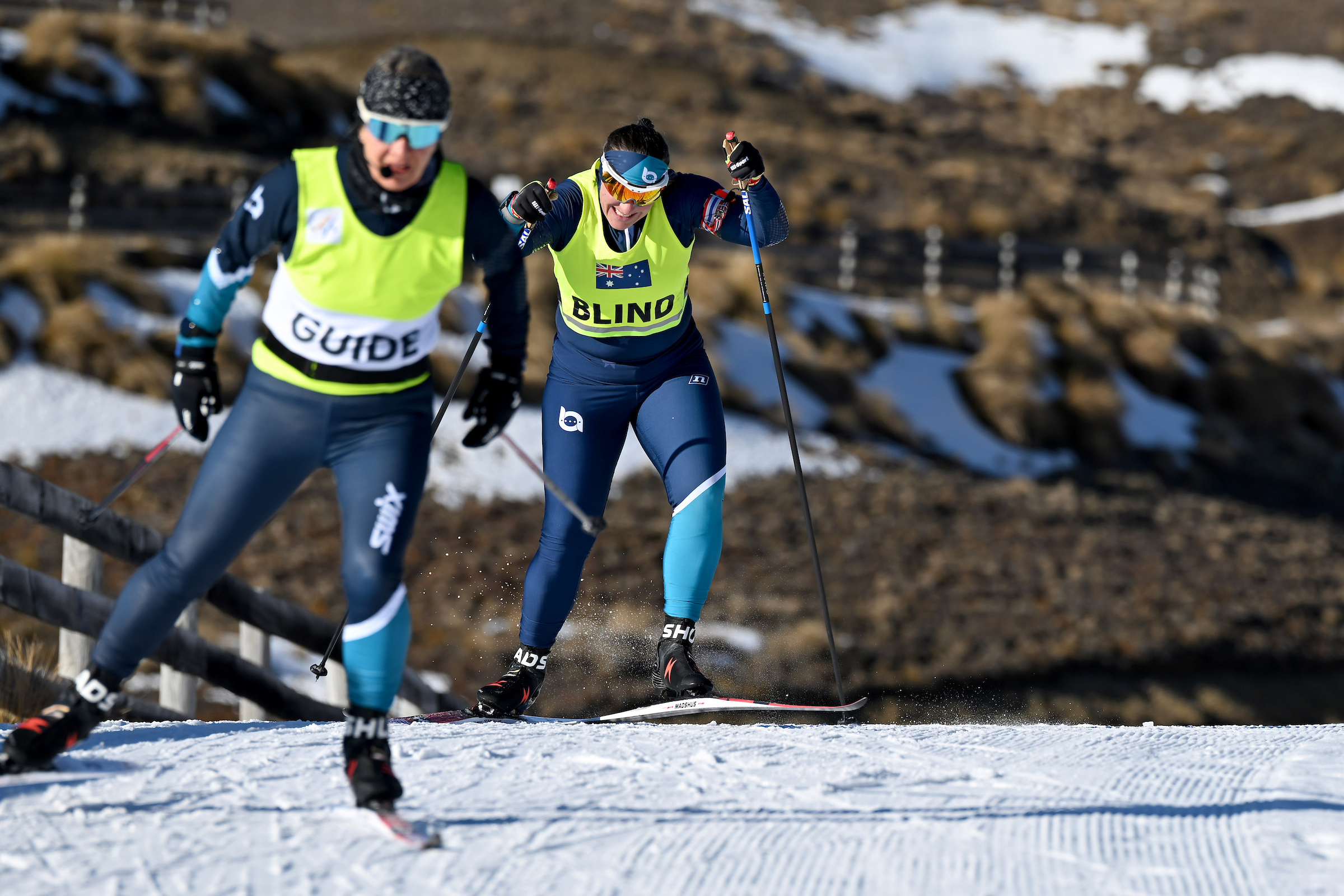
Winter Paralympian Taryn Dickens is fighting a medical condition that in 2019 led her to alcoholism and, eventually, a six-week stint in a mental health unit.
But the Canberran has refused to allow her battle with cone-rod dystrophy, a group of disorders characterised by vision loss, dictate her life in the long run, culminating in her competing at the Milano Cortina Paralympic Winter Games.
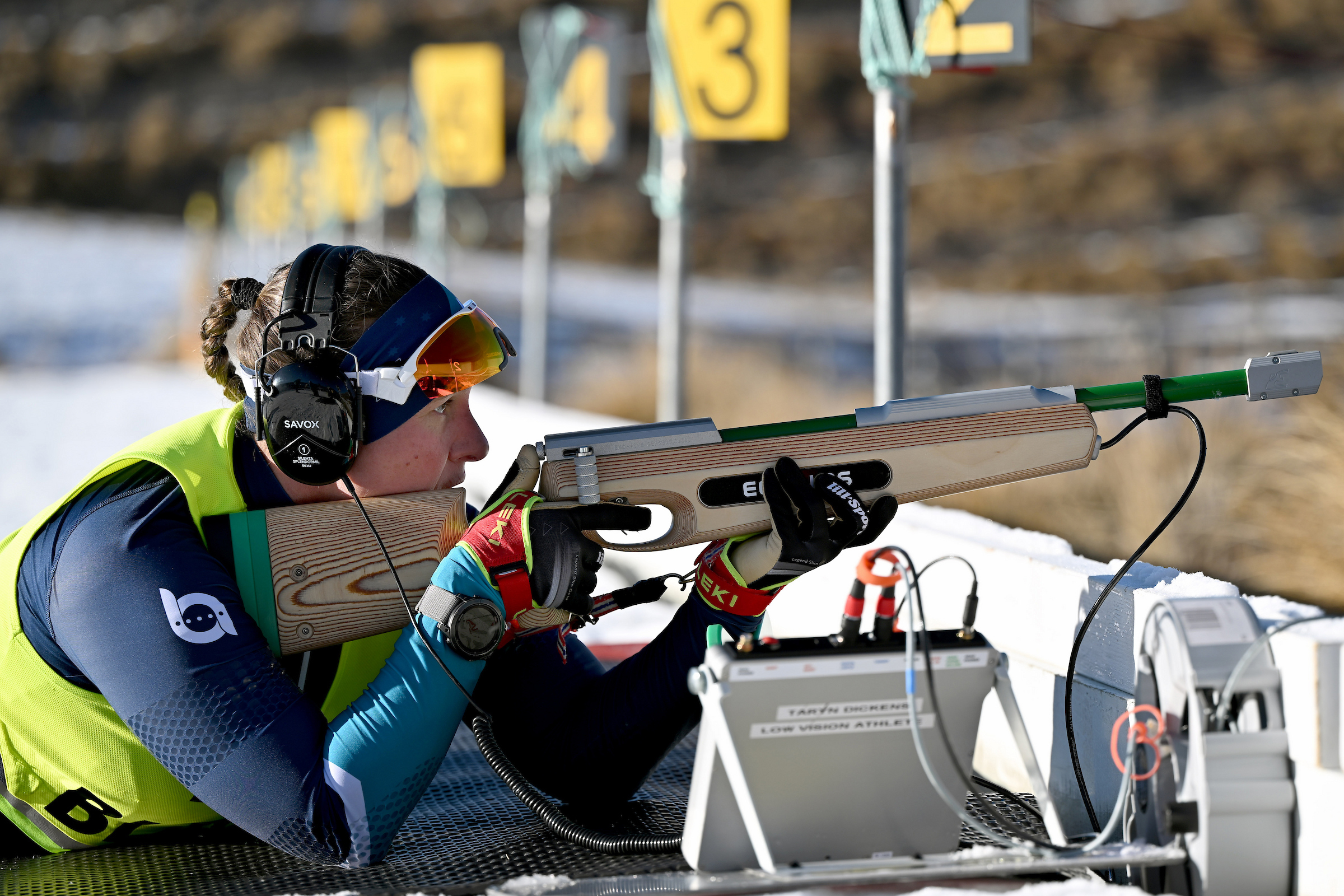
Dickens, 43, is in Italy to contest a range of events across the disciplines of biathlon and cross-country skiing.
READ MORE: Gould's plea to refs as NRL issues warning to all clubs
READ MORE: Iran all but pulls out of World Cup over 'wicked acts'
READ MORE: Great grills Eels over 'reckless' $2.6m play for Origin star
She has become Australia's oldest female Winter Paralympian on her Games debut.
It's testament to just how resilient she's been since a range of concerning symptoms began troubling her at 36, and the admirable way in which she's taken to biathlon and cross-country skiing since her life-changing diagnosis.
"It got pretty dark," Dickens, who's carved out a career in the Navy, recalled of her battle with alcoholism and mental health in an interview with Wide World of Sports.
"I had a house in Sydney. Being in the military, you're kind of alone and isolated because you don't have a lot of family around you.
"I worked in a workshop with a lot of boys who tried their best to help me, but the way we bonded was over beers, so I started drinking. I wasn't a big drinker before that, but I just started drinking, and on the way home from work I'd grab a couple of bottles of wine and would drink at night to help me sleep.
"I just had no purpose really because I didn't know what was coming for me. I was not sure if I would be able to stay in the Navy."
Watch the Winter Paralympic Games Milano Cortina 2026 live and free on Channel 9 and 9Now. Plus, every event live & on demand, every medal in 4K, and exclusive international coverage on Stan Sport.
Dickens now works in administration with the Navy. Prior to her diagnosis, she worked as an electronics technician.
"I was a fitter and turner. I did a mechanical trade in my 20s and then moved on to the electronics in my 30s. I had known nothing else other than working with my hands," Dickens said.
"So having vision distortions and things like that, and not being sure about what I'm seeing, was quite concerning.
"And being told that motor neurone disease [MND] could be a thing, or MS [multiple sclerosis], when you don't really have anyone to lean on, you've got no family around you, it was hard.
"Unfortunately, alcohol helped me out, but at the same time, alcohol might have kept me alive, too."
Six months passed between symptoms arising and doctors delivering her the diagnosis.
She had become so dependant on alcohol that she was binging after work every day, often grabbing a six-pack of beers and a couple of bottles of wine on her way home.
She'd then sit at home and try to drink her demons away.
She knew she was desperately in need of seeing a psychiatrist. She also knew she was in desperate need of spending time in a mental health unit. She booked in to see a psychiatrist and requested exactly that.
"I think I was well pickled by the time I got to the hospital," Dickens said, finding humour in her darkest hour.
Her sense of humour shone through a couple of times in the chat.
"Bombs and blindness don't really go together," she grinned, reflecting on her move from electronics to the office.
"It was good to be able to say I've had enough [of the alcoholism], I need more help than what I'm getting, and I need to go to a hospital.
"It's all a part of it, right? It's all a part of coping and moving forward and just dealing with things.
"I'm really glad that I was able to pull myself out the other side.
"I wish more people could do it," she added, reflecting on the mental health care she received.
"I wish it was available for more people. I'm very fortunate, being in Defence, that it's something that's available for us if we need help."
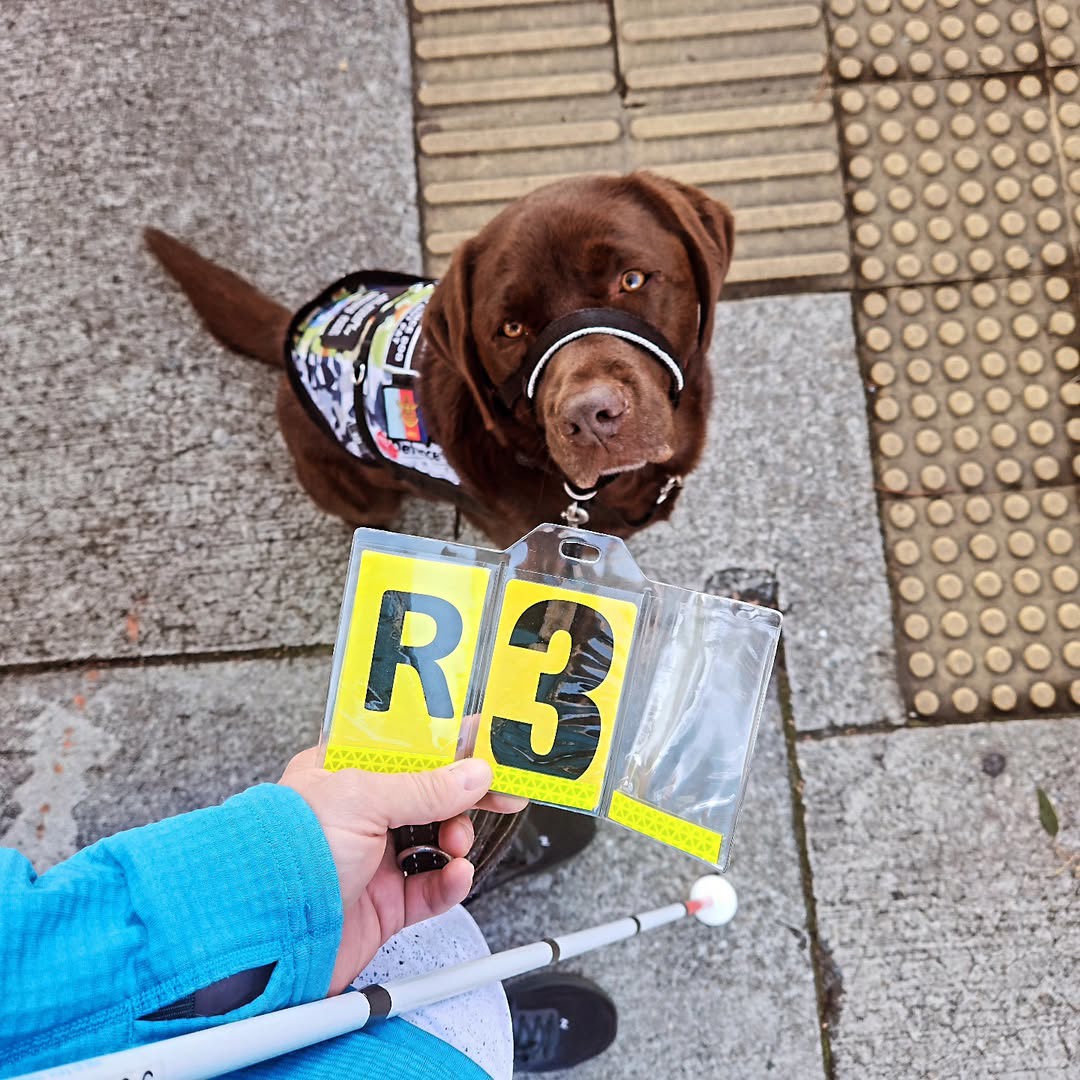
Dickens has a guide dog. Her name is Gigi.
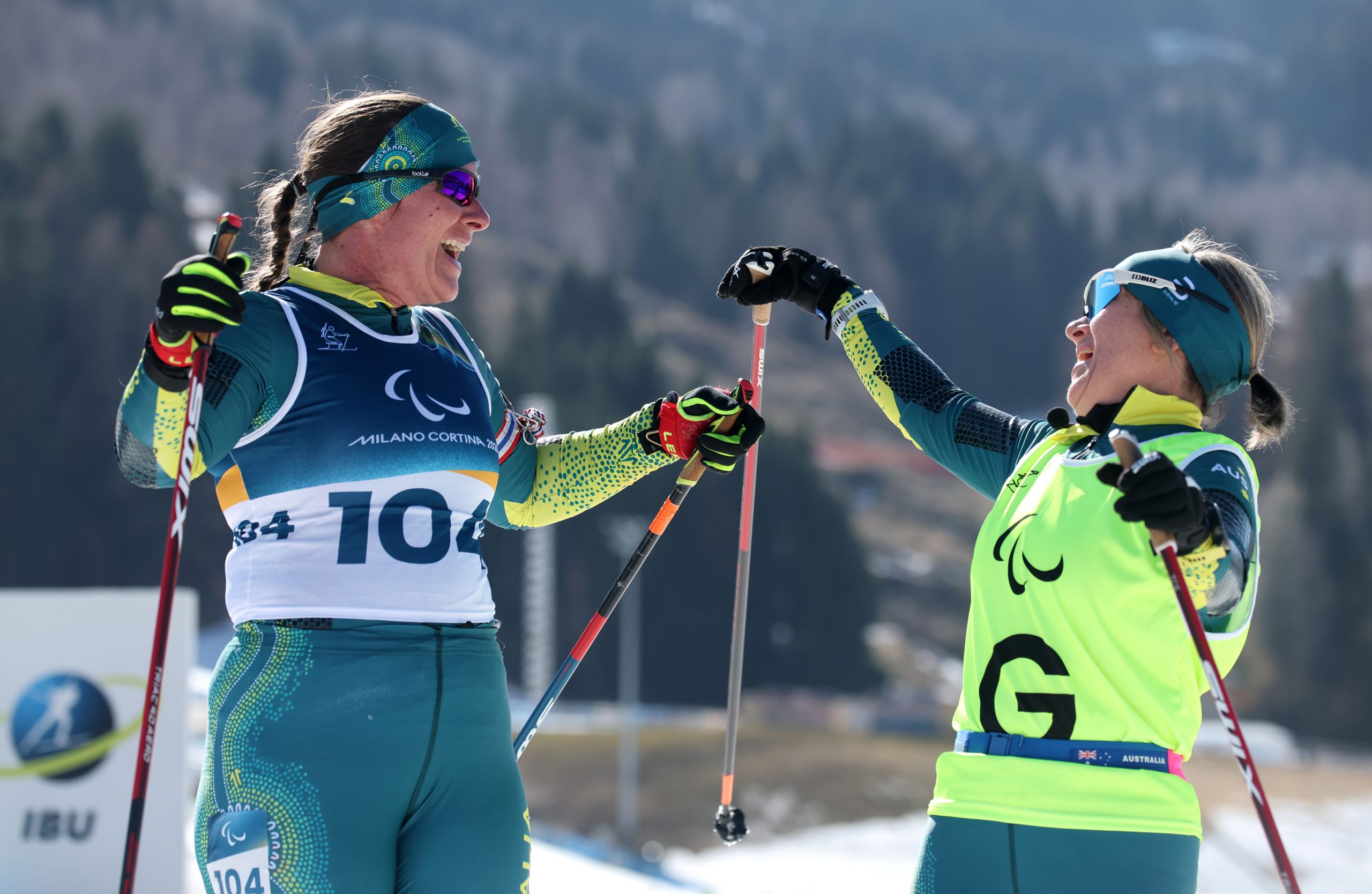
In competition, she's guided by Lynn Maree Cullen.
For Dickens, her battle with cone-rod dystrophy began with a bad headache that wouldn't abate.
"I just thought I had a migraine, the sparkly kind of vision stuff, and it just didn't go away," she recalled.
"So I just went to the doc and got some help with that, and it took them about six months to work out what it was.
"I was pretty happy with the diagnosis, compared to some of the alternatives."
When Dickens pushed off for her first event of the Paralympics, tears began rolling down her face.
Speaking from Lago, Italy mid-Games, she took a moment to soak up her immense sense of pride.
"I am so proud of how I've just continued to push forward and keep focused on the goal of making the Paralympics," she said.
"For me being at the Paralympics, it's never been about medals or crossing the finish line first; it's just been about crossing the finish line. I've certainly done that. I've done it in style, with some friends from home in the crowd.
"I've just been extremely proud of myself, and how I continue to move forward, set new goals, and keep myself happy."
Leave a Reply
You must be logged in to post a comment.