

When Peter Sterling famously struggled to break through a giant banner in front of 12,000 confused spectators in southern California almost four decades ago, it could be seen as a warning to rugby league about how difficult breaking into a packed US sports market would prove to be.
But almost 40 years and several failed attempts later, is the game finally on the verge of making it big in the nation with a population of more than 300 million people? Or is Peter V'landys simply flogging a dead horse?
READ MORE: Gould's plea for Haas to emulate Burgess in Souths move
READ MORE: Fiery match stopped for minutes after racism allegation
READ MORE: Former All Black's heartbreaking post after son's death
Rugby league's infatuation with the states is nothing new. In fact it stretches back almost a century.
LEAGUE'S AMERICAN OBSESSION
Australian rugby league's bona fide push into the states can be traced back to 1953 when famed administrator Harry Sunderland organised for an American team to tour Down Under – and New Zealand – shortly after petitioning the Australian Rugby League Board of Control to help promote the game to Americans.
A team mostly consisting of gridiron players was assembled and flown to Australia to play several games, and a crowd of 65,453 fans turned out at the Sydney Cricket Ground to watch them lose 52-25 to Sydney.
The American team played a total of 18 games – mostly against regional amateur teams – and won five of them. The tour drew plenty of criticism, with Australian forward Ray Stehr among those labelling the exercise a farce.
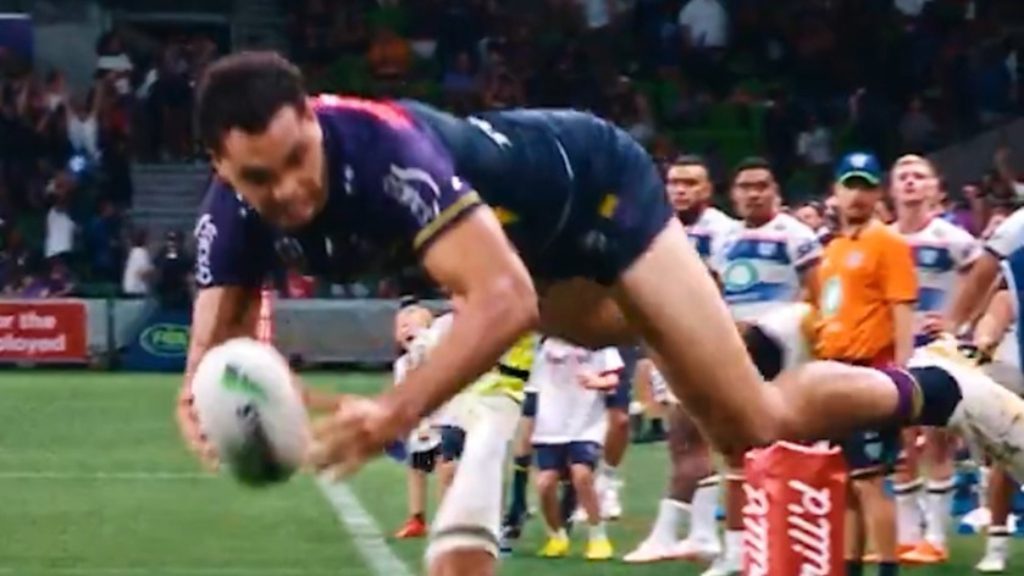
Despite the vitriol from some sections of Australian league, in 1954 a representative team flew to America to play two exhibition games against New Zealand following the World Cup. Crowds of 4500 and 1000 showed up to watch the games, resulting in a financial disaster.
Aussie officials went cold on the states after that, and it was more than three decades before they flirted with taking big games there again.
STERLO'S INFAMOUS BANNER FAIL
Australia reignited its mission in 1987 when a fourth State of Origin game was organised, to be played in Long Beach after Queensland had already won the three-game series 2-1 back home.
Legendary halfback Peter Sterling was named captain of New South Wales for the first time and led the Blues to a 30-18 victory in front of 12,349 fans at Veterans Stadium.
A row later erupted when NSW tried to claim the 1987 series had been drawn 2-2, but Queensland staunchly denied the California outing was actually included in the series result. The league judged the Maroons to be correct, although stats from the fourth Origin game still count towards player records.
Sterling gave the crowd some light entertainment before the game had even started.
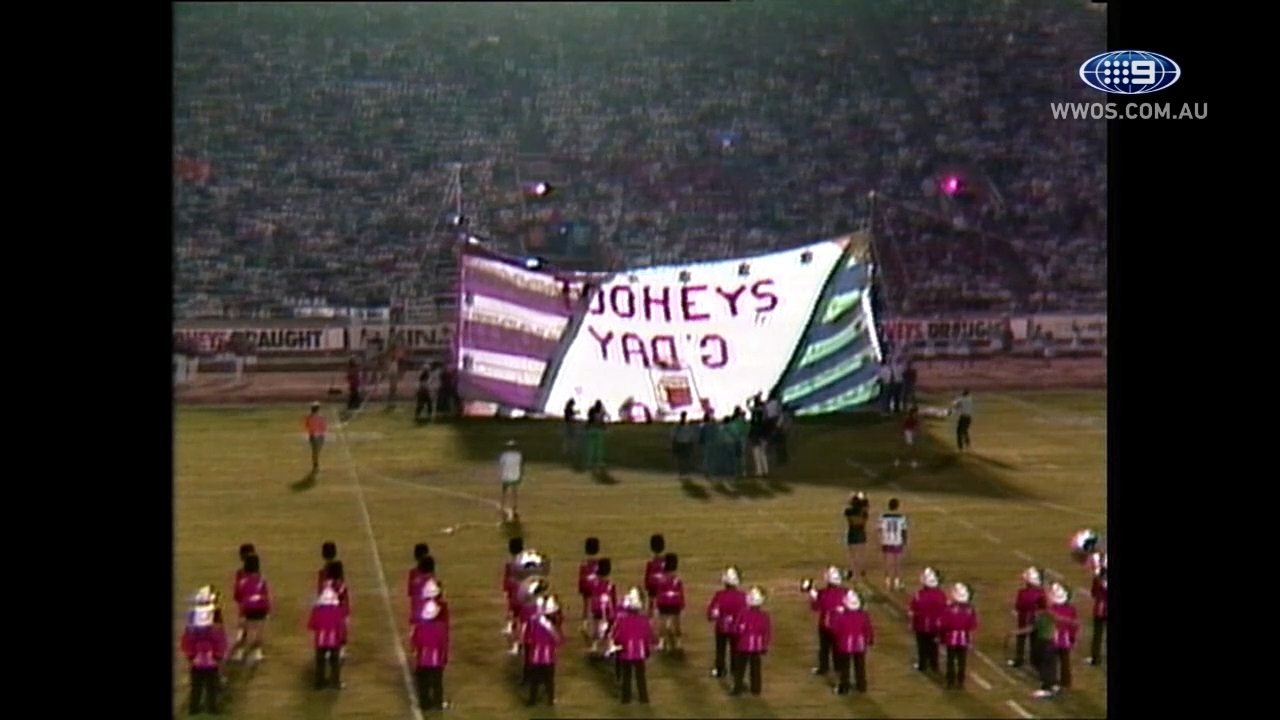
The Eels icon led his Blues out onto the field and was supposed to run through a giant Tooheys banner that said "G'day".
But he became entangled in it and failed to properly break the banner apart, as several of his teammates chose to simply run around it and save themselves the embarrassment.
Years later, Sterling recalled the iconic fail and explained his rookie mistake.
"So on the morning of the game, this young lady comes up to me and says, excuse me Peter, I'm here to tell you how to run through the banner," he told Wide World of Sports in 2023.
"I'm thinking I'll handle this, you know… and I fobbed her off. I should have listened.
"So the game night came around and mate, (there was) a nice healthy crowd. But more importantly, the game's being beamed back by satellite to Australia, to a million people. And my family and friends are going to be watching me lead the Blues for the first time.
"So I've got to the end of the tunnel. I've got the ball under the arm – and beautiful, balmy night on the west coast of America. And I'm feeling good, so I hit top pace and I hit the banner… and it was like a brick wall.
"The whole thing is held together by sticky tape. Except for this one little area, this corridor where the girl was going to tell me how to run through it. Now because it's like a spider's web, I'm halfway short, I can't go forward and I can't go back.
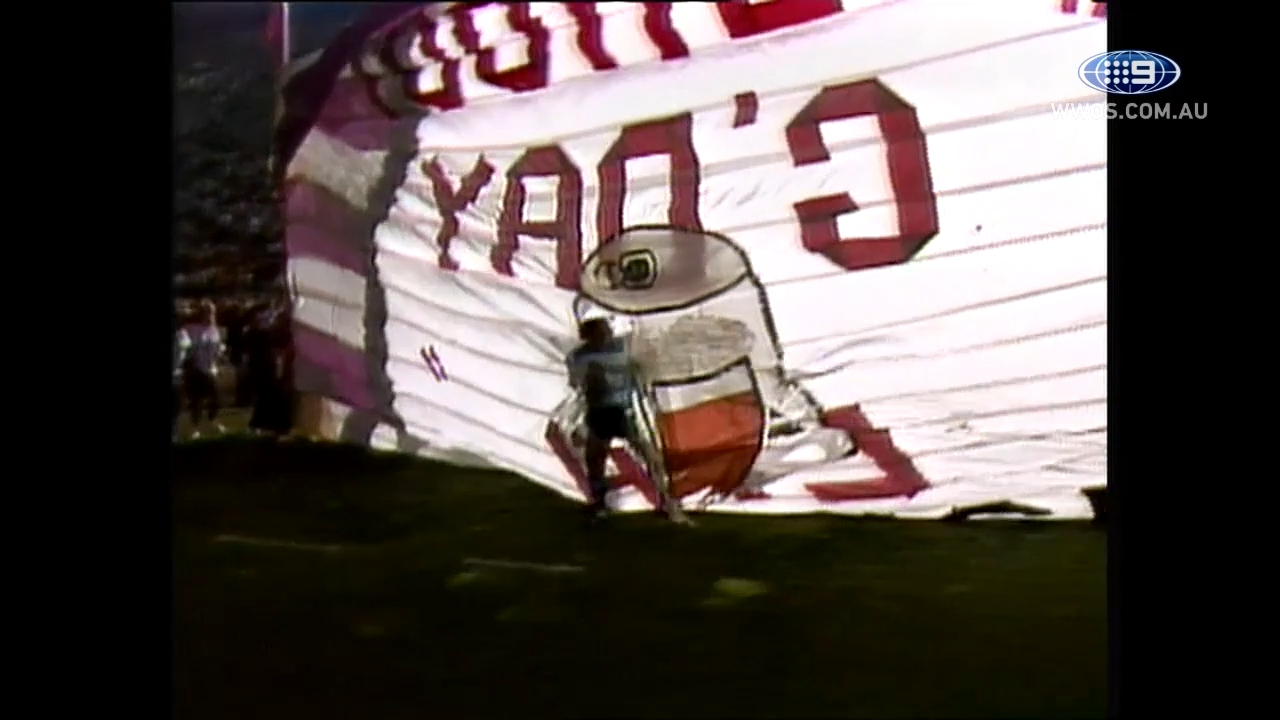
"So I turned around and looked at the next in line and that was Royce Simmons. He looked back at me. Turned around again, looked at Royce. He looked back at me. I turned a third time, looked at Royce. He shrugged his shoulders and took the whole team around the banner.
"I missed the kick-off."
Sterling's night ended on a high when he was named man of the match in the NSW victory.
In the years that followed, league administrators were criticised for failing to capitalise on the buzz that game created, and it was years again before they went back.
In fact St George's 1991 end of season trip made more of a long-lasting impact, when halfback David Niu met his future wife in Hawaii and ended up moving to Philadelphia, where he later played for the US, then coached the team, and then became integral in American rugby league administration and coaching.
Hollywood actor Russell Crowe attempted to make league a thing in his adopted homeland when he organised an exhibition game between the Rabbitohs and Super League winners Leeds in early 2008.
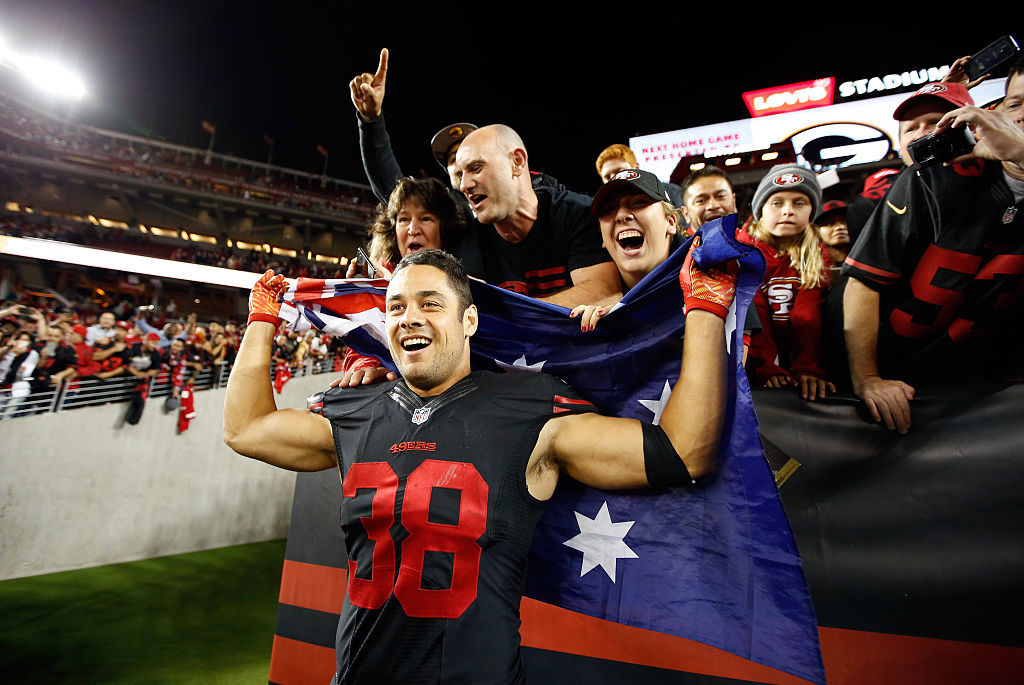
Australia also made a splash in the states when NRL star Jarryd Hayne had a sojourn in the NFL, playing eight games for San Francisco in 2015 before being cut.
"It's been a struggle," USA Rugby League chairman Peter Illfield told The Sydney Morning Herald in 2022.
"There are some people in the states that have spent quite a number of years developing the game through community sport, but they're doing it on a shoestring budget. Without an influx of funds, it can be difficult."
V'LANDYS AND THE YANKEE DOLLAR
The most solid commitment made to building the game in America has come from Peter V'landys.
V'landys is one of the sharpest minds and shrewdest operators in Australian sport and he has certainly made his presence felt since being made chairman of the Australian Rugby League Commission.
His boldest move, by far, has been the five-year contract he orchestrated to open the NRL season in Las Vegas for five consecutive years, the first of which was in 2024.
His motive is no secret – while V'landys no doubt wants the game of rugby league to flourish in America, he has his sights set firmly on carving out a slice of the financial pie to benefit the NRL, too.
"I think our fee will be a lot bigger now, and they'll probably have to give us a kidney," he said in an interview with Nine during last year's Vegas festival.
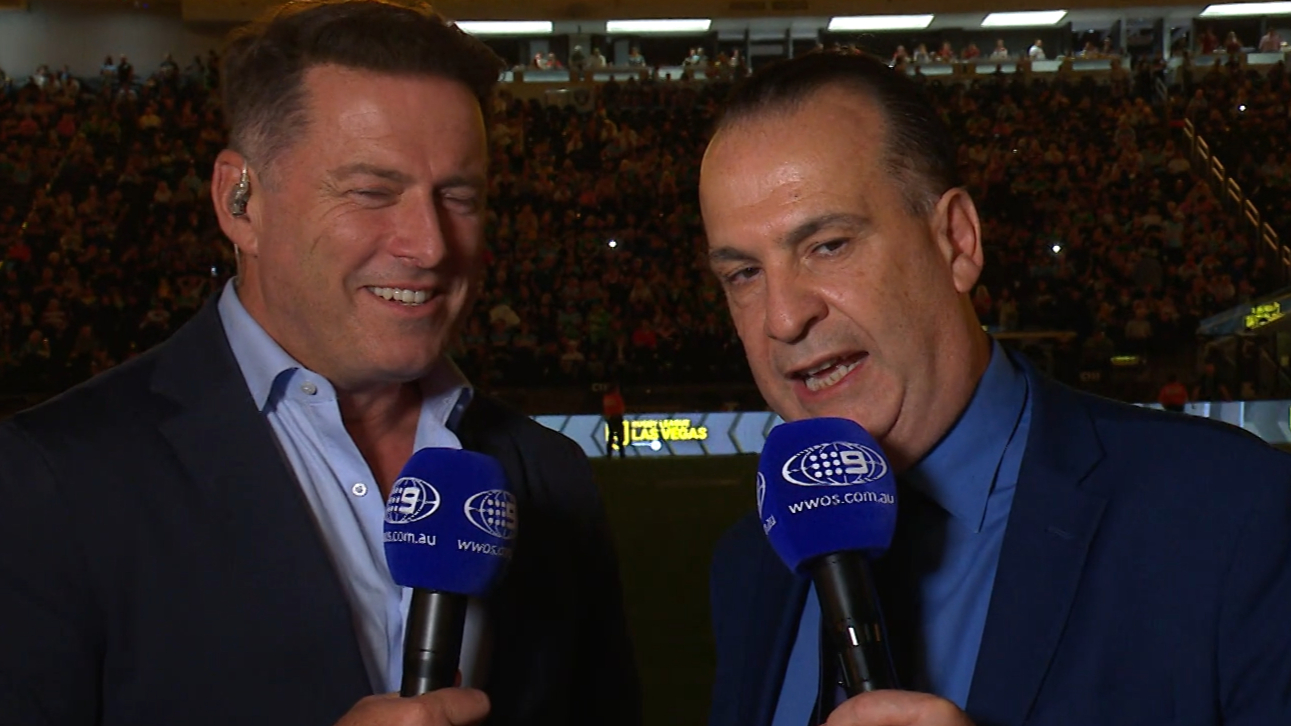
"We're making enormous progress but we've had some very big guns in America, experts in sports management, that have come to us and given us more confidence with how we can break into the American market.
"So, I'm very confident that by year five, we'll have a major impact here in America. I'm more confident now than I was last year."
If Sterling struggled to break through the paper wall 39 years ago, V'landys is taking a sledge hammer to the brick one standing in his way today.
The NRL will mark the third year of its Vegas venture next week when Allegiant Stadium is packed out to watch the Knights, Bulldogs, Cowboys, and Dragons show the Americans what league is all about.
Will the interest stick this time, or is it another flash in the pan? Time will tell.
Leave a Reply
You must be logged in to post a comment.