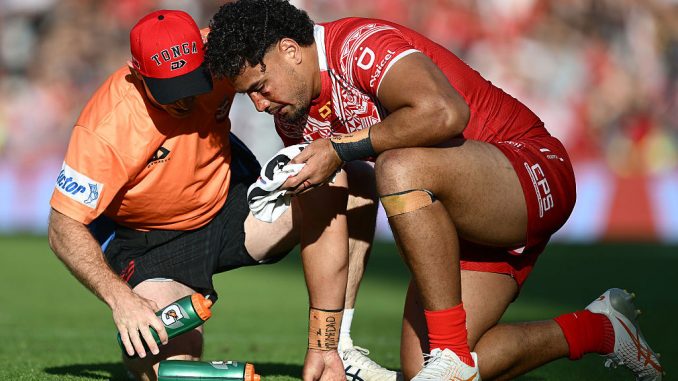
Panthers premiership winner Martin Lang has slammed the breach notices given to four Tonga officials as a "Band-Aid solution" following the sickening saga that resulted in Eliesa Katoa undergoing brain surgery.
On Monday, the NRL revealed Tonga's head doctor, assistant doctor and head trainer were facing two-year bans, and issued the medical assistant with a formal warning.
It's been proposed by the league that the doctors and trainer are banned from being involved, whether directly or indirectly, with any club, team or player in competitions run by the NRL or the ARL Commission for a period of no less than two years. The Tonga officials have five days to respond to the breach notices.
READ MORE: Marsh set to make big call on playing future with one twist
READ MORE: 'Convinced' McLaren chief's bold call on Piastri's future
READ MORE: 'I will not be that person': Richo's vow after quitting Tigers

Katoa was on three occasions hit in the head during Tonga's clash with New Zealand at Eden Park in the Pacific Championships on November 2, prompting the NRL to launch an investigation into the handling of his health.
The league revealed it identified a number of serious concerns relating to communication between multiple staffers, including "the failure to share and disclose information that was vital to the health of the player".
Lang knows what it is like to suffer a series of head impacts and he studied to become a neuroscientist after retiring from the game, with his main focus on contact sport-induced traumatic brain injuries.
The 50-year-old called for one piece of technology to be introduced to the league in a bid to prevent similar situations from unfolding in the future.
"A bandaid (sic) solution for a problem that's not going away," Lang wrote on X.
https://twitter.com/Martin_Lang11/status/1997975962735325507?ref_src=twsrc%5Etfw
"Solution – mandatory use of instrumented mouthguards measuring head kinematics when an athlete is involved in a collision during practice and/or match play.
"This Katoa incident is prevented with the utilisation of this technology."
Instrumented mouthguards were trialled by athletes in the Women's Rugby World Cup this year. When the player suffered a head impact, the mouthguard would light up red and medical staff would be alerted to perform a head injury assessment.
The NRL has not indicated if this technology will be used or not.
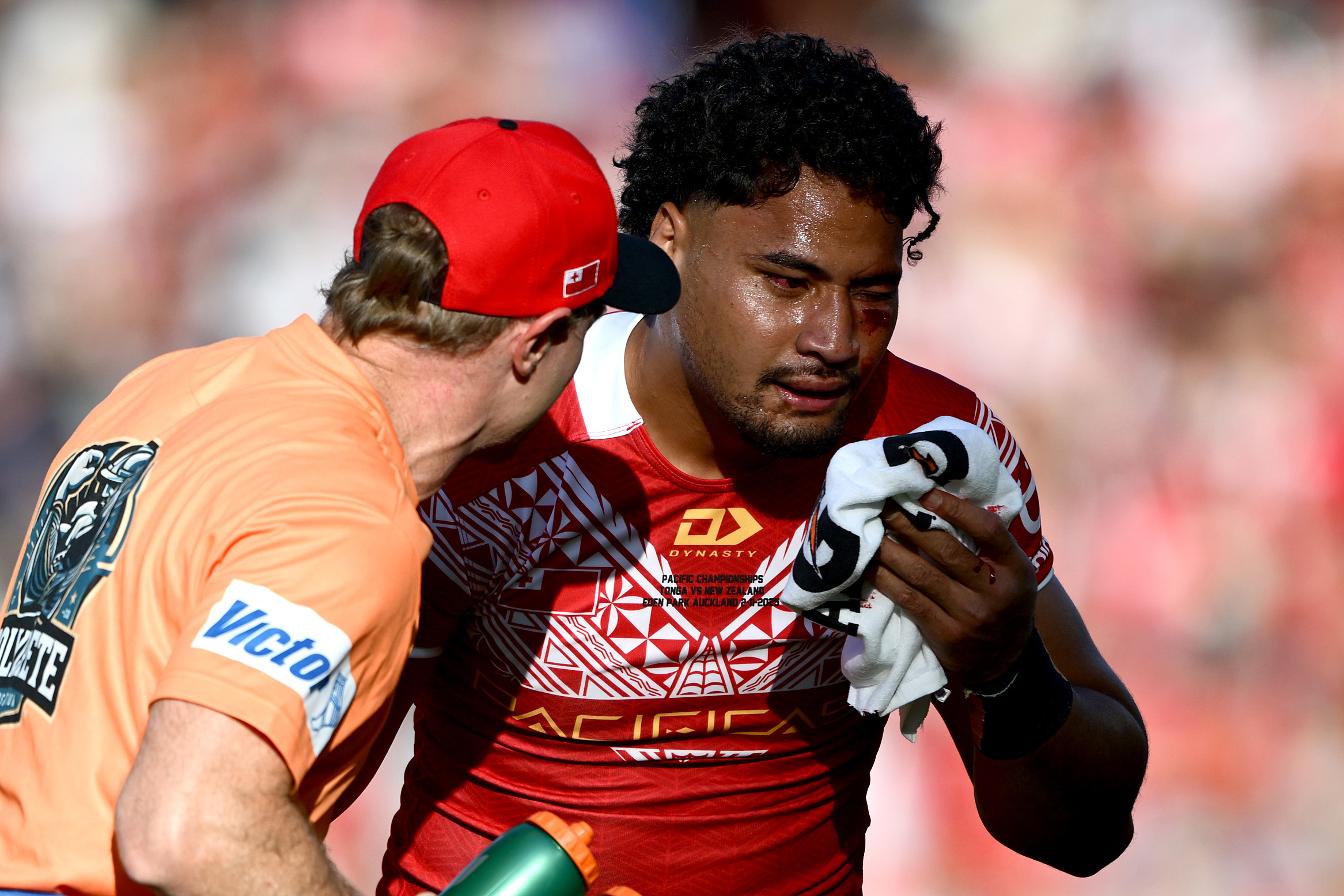
Vision surfaced during the game of Katoa's head jolting back violently when teammate Lehi Hopoate accidentally shouldered him while jumping to catch a ball in the warm-up. Tonga officials did not see the collision at the time and were not made aware of the vision until after full-time.
Katoa then copped an accidental forearm to the head from teammate Will Penisini in the 10th minute. The 25-year-old left the field for a head injury assessment but was cleared to return.
He was again hit in the head in the 53rd minute and only then ruled out of the match.
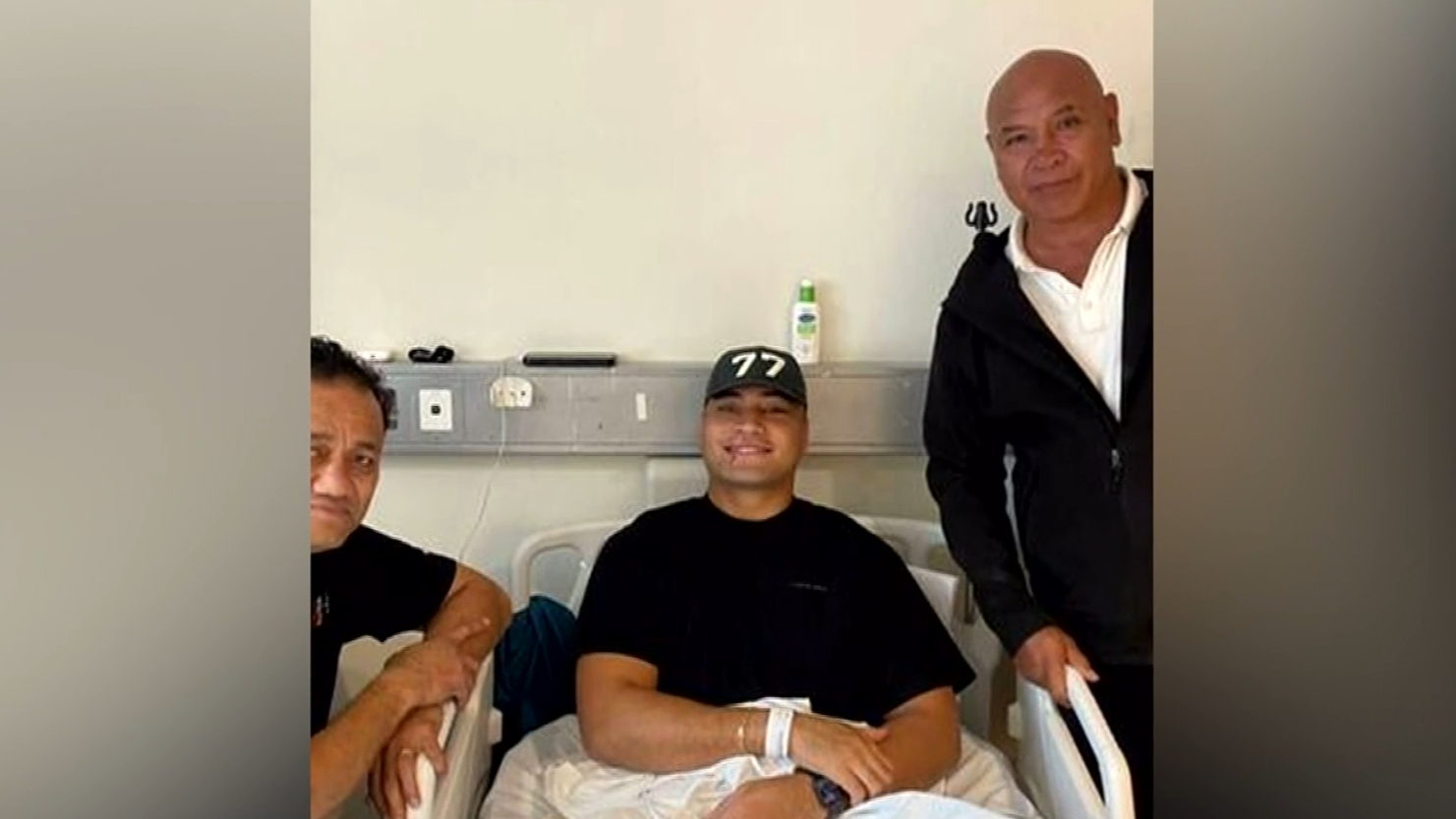
His club, the Melbourne Storm, said he was rushed to hospital after suffering seizure activity on the bench after being ruled out of the game.
The Storm confirmed last month that Katoa would not play in 2026.
The back-rower posted on Instagram after being discharged from hospital last month, saying he was "in a good place now" and declaring: "In God's timing I'll be back soon."
Former Cronulla and NSW captain Paul Gallen made scathing comments about the handling of Katoa's health in an interview with The Sydney Morning Herald last month.
"Anyone who has not done their job properly in this matter that has clearly let the player down should be sidelined for a minimum of a year at least, if not a life ban. It was ridiculous," Gallen said.
"I mean Eli is out for a year at least and in judicial cases that's a factor, but this is much more serious.
"What happened to Katoa was a disgrace. And I'm one who thinks some of the penalties or action we see for accidental high contact is over the top. But not in this case."
In addition to the breach notices dealt to the four Tonga officials, each of them must undergo further training on the management of head injuries.
Leave a Reply
You must be logged in to post a comment.